Two women champions mentored by the GEF-6 CFI Indonesia project, Sri Fany Mony from Ohoi Watkidat, Southeast Maluku, and Sintawati from Ambon, shared best practices in women's empowerment at the 11th GEF International Waters Conference (IWC11) in Bali. Through presentations and international discussions, both introduced the experiences of Indonesian coastal women's groups in developing capacities, strengthening enterprises, and enhancing the role of women in community life.
.jpeg)
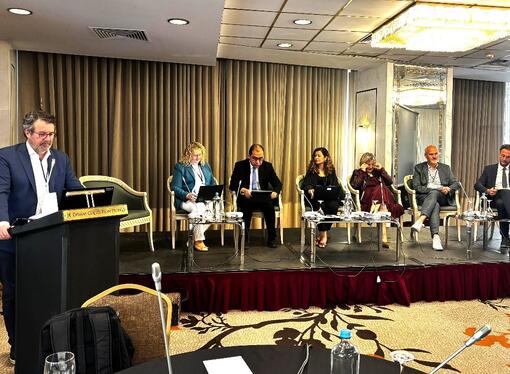
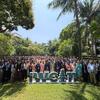
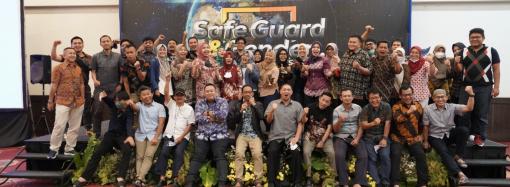
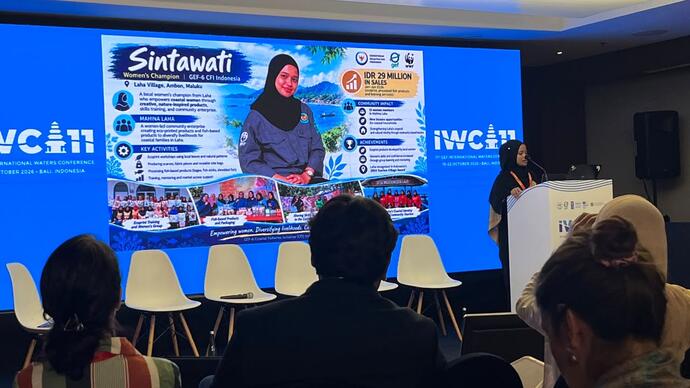
Two GEF-6 CFI Indonesia Women Champions Share Experiences at IWC11. Participants attending Special Session 4: “Advancing GEF-9's Broader Whole-of-Society Agenda through Women's Empowerment and Leadership” on October 22, 2026, at IWC11, Bali. This session featured Sri Fany Mony from Ohoi Watkidat, Southeast Maluku, and Sintawati from Ambon, two women champions mentored by GEF-6 CFI Indonesia who shared their experiences in women's empowerment within sustainable fisheries management.
Their participation took place during the Gender Clinic on October 21, 2026, and Special Session 4: “Advancing GEF-9’s Broader Whole-of-Society Agenda through Women’s Empowerment and Leadership” on October 22, 2026. In both forums, community-level experiences became part of knowledge exchange with various international projects and stakeholders.

Bringing Coastal Women's Experiences to International Forums
In Clinic 2: “How to Move from Gender Commitment to Action: A Gender Clinic for International Waters Projects” on Wednesday, October 21, Fany and Sintawati shared experiences regarding the women's empowerment process through GEF-6 CFI Indonesia mentoring.
.jpeg)
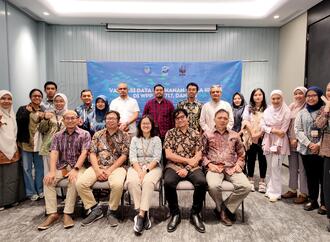
Two GEF-6 CFI Indonesia Women Champions Participate in the Gender Clinic at IWC11 Bali. Two women champions mentored by GEF-6 CFI Indonesia, Sri Fany Mony from Ohoi Watkidat, Southeast Maluku, and Sintawati from Ambon, had the opportunity to join the Gender Clinic session on October 21, 2026, during the IWC11 series in Bali to strengthen understanding of gender perspectives in sustainable aquatic resource management.
This discussion addressed how gender equality commitments can be implemented in project execution, including through skills development, business group strengthening, and expanded opportunities for women to participate in economic activities and community-level decision-making.
Clinic 2: “How to Move from Gender Commitment to Action: A Gender Clinic for International Waters Projects”
Faridatun Amalia Hasanah, Gender Specialist for GEF-6 CFI Indonesia, also participated in the session to share lessons learned from the gender approach applied within the project.
“For us, the success of empowerment is measured not only by the number of women participating in activities, but also by the opportunities they have to develop businesses, build self-confidence, and assume greater roles in their communities,” said Amalia.
Sasi Label and Real Changes at the Community Level
On Thursday, October 22, 2026, GEF-6 CFI Indonesia's experience was reintroduced in Special Session 4: “Advancing GEF-9’s Broader Whole-of-Society Agenda through Women’s Empowerment and Leadership.”

Gender Specialist for GEF-6 CFI Indonesia, participated in Special Session 4: “Advancing GEF-9’s Broader Whole-of-Society Agenda through Women’s Empowerment and Leadership” on October 22, 2026, in Bali. This session discussed strengthening women's empowerment and leadership in supporting an inclusive global environmental agenda.
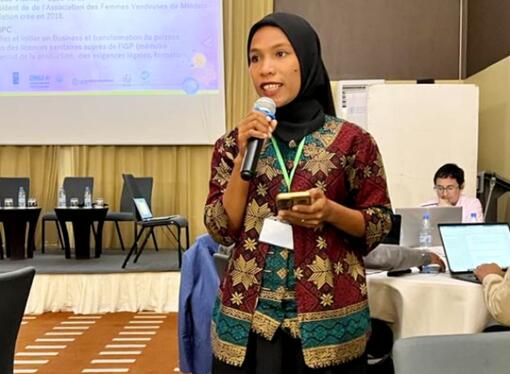
In this session, Amalia introduced the project's women's group empowerment approach, including through the Sasi Label initiative. Presentations were then continued by Fany and Sintawati, who delivered their groups' experiences and achievements before and after receiving project mentorship.
“Through the Sasi Label initiative, we aim to connect local wisdom and sustainable fisheries management with women’s empowerment and livelihood opportunities. We believe that women should not only benefit from conservation efforts, but also have meaningful opportunities to participate in local economic activities, develop their businesses, and contribute to the sustainability of their communities. Sasi Label is one of the ways we are working to strengthen that connection.” – said Amalia.
Sasi Label serves as one of the approaches connecting local wisdom in resource management with efforts to strengthen community roles, including women, in the development of sustainable fisheries businesses and products.
Fany shared her experience in developing the capacities and activities of women's groups in Ohoi Watkidat.
“For us, the opportunity to share experiences in this international forum is highly meaningful. We can recount what we have learned and developed together with the group, while showing that women in villages also possess the capability to grow and contribute to society,” said Fany.
.jpeg)
Two GEF-6 CFI Indonesia Women Champions Present Sasi Label at IWC11 Bali. Sri Fany Mony from Southeast Maluku and Sintawati from Ambon introduced Sasi Label as one of CFI Indonesia's best practices in sustainable fisheries management at the IWC11 international forum in Bali.
Meanwhile, Sintawati highlighted the importance of opportunities for women to continuously learn, develop potential, and expand networks.
“We hope the experiences we share can serve as inspiration for other women's groups. With learning opportunities and proper support, women can become more confident in developing businesses and assuming roles in their environments,” expressed Sintawati.
Both presentations formed part of a discussion that also featured lessons from Peru, Argentina, Guatemala, and IW:Learn regarding women's empowerment approaches in International Waters projects. Through presentations, panel discussions, and Q&A sessions, participants exchanged experiences concerning women's leadership and whole-of-society approaches in supporting sustainable resource management.
Gaining Attention in International Knowledge Exchange
On the sidelines of the conference, Fany and Sintawati also had the opportunity to converse with Mirea Cano Vinas, Independent Senior Consultant, Gender and Safeguards Specialist at UNDP. This meeting served as a space to exchange information on the application of gender and safeguards approaches, including lessons from GEF-6 CFI Indonesia.
During the conversation, Mirea showed interest in the women's empowerment approach applied in Indonesia, specifically how women's group mentoring and the Sasi Label initiative link local wisdom with business development and women's involvement in coastal resource management.
“Experiences such as those shared by the women champions from Indonesia offer valuable insights into how gender commitments can be translated into action at the community level. The CFI Indonesia experience, particularly its efforts to connect women’s empowerment with local knowledge and sustainable fisheries, provides an interesting example for cross-country learning.” – Mirea.jpeg)
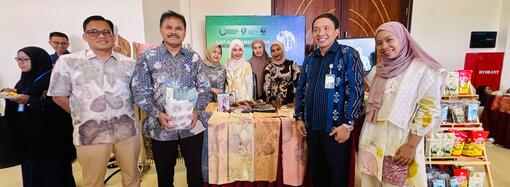
UNDP Representative Appreciates Sasi Label and GEF-6 CFI Indonesia Gender Mainstreaming. Mirea Cano Vinas, Independent Senior Consultant, Gender and Safeguards Specialist at UNDP, appreciated the concept of Sasi Label and gender mainstreaming within the GEF-6 CFI Indonesia program, including women's involvement in eco-print batik product development supporting community creativity and economic empowerment.
This exchange demonstrated the importance of bringing direct community experiences into international forums. Through the stories of Fany and Sintawati, grassroots-level learnings can be shared by women undergoing the empowerment process themselves, while opening spaces for discussion with gender and safeguards practitioners from various nations.
Strengthening Women's Leadership and Sustainability
Through GEF-6 CFI Indonesia, women's empowerment constitutes part of efforts to strengthen coastal livelihoods and support sustainable fisheries management. Skills development, business groups, leadership, and networking form components of the process to broaden women's opportunities to contribute to community development.
The participation of Fany and Sintawati in IWC11 stands as proof of the importance of providing space for local champions to share knowledge, introduce best practices, and contribute to international conversations on gender equality and sustainability.
Their experiences demonstrate that coastal women are not merely program beneficiaries, but also business operators, community leaders, and sources of learning capable of inspiring empowerment initiatives elsewhere.
0 COMMENTS