
How do coastal community empowerment programs contribute to marine ecosystem preservation while improving fisher welfare? This question formed the focus of monitoring and evaluation (Monev) assessments conducted by the Planning Bureau of the Ministry of Marine Affairs and Fisheries (MMAF) concerning the implementation of the Global Environment Facility (GEF)-6 Coastal Fisheries Initiative (CFI) Indonesia in eastern Indonesia.
.jpeg)
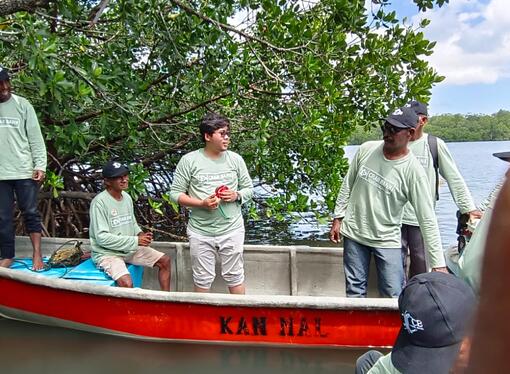
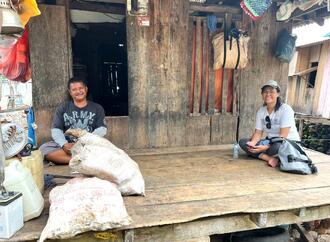
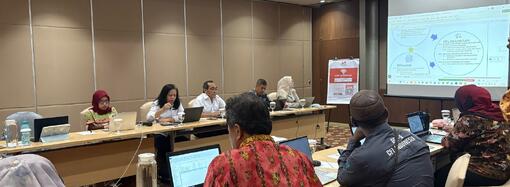
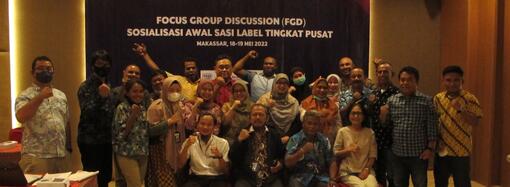
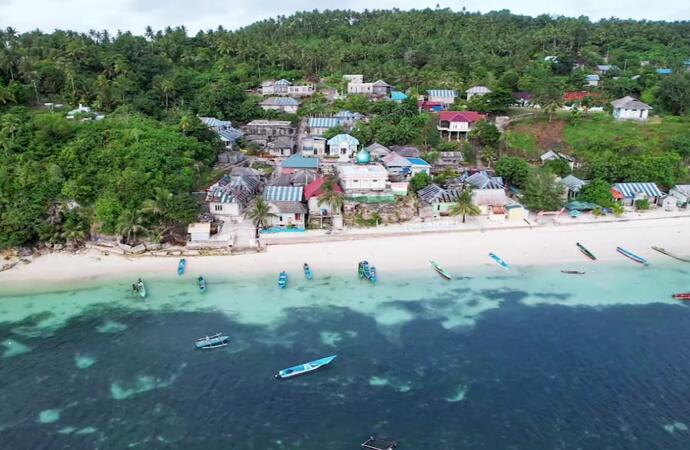
Monitoring and Evaluation (Monev) Team members from the Planning Bureau of the Ministry of Marine Affairs and Fisheries (MMAF) conducting a field visit in Watkidat Village, Southeast Maluku Regency, as part of the Blue Economy Implementation Study to evaluate the impacts and achievements of the GEF-6 CFI Indonesia Program, a cooperative result between MMAF and WWF-US. This visit was conducted to gather direct information from communities and identify program contributions to coastal ecosystem conservation, economic productivity enhancement, and community welfare.
The study, outlined in the book Kajian Implementasi Ekonomi Biru pada Kampung Nelayan di WPP 715, 717, dan 718 (Blue Economy Implementation Study in Fishing Villages across WPP 715, 717, and 718), evaluates program interventions across five assisted villages: Laha in Ambon City, Menarbu in Wondama Bay Regency, Watkidat in Southeast Maluku Regency, and Kiltay and Kilwaru in East Seram Regency.
Head of the MMAF Planning Bureau, Rudi Alek Wahyudin, emphasized that data-driven evaluations are essential to measure program effectiveness and ensure benefits are experienced by communities.
“Through this data-driven Monev, we want to ensure that GEF-6 CFI Indonesia interventions truly deliver tangible contributions to community capacity building, ecosystem management, and coastal economic activity development,” he stated.
Program interventions encompass strengthening coastal ecosystem management, enhancing fisher capacities, developing fishery product processing businesses, empowering women, and strengthening community institutions. Conservation approaches are also developed through Sasi practices, indigenous community institutions, Community Surveillance Groups (Pokmaswas), and Other Effective Area-Based Conservation Measures (OECM) approaches.
The evaluation measures program contributions across three Blue Economy dimensions: Ocean Health (ecosystem health), Ocean Wealth (productivity and economic value), and Ocean Prosperity (community welfare). Assessments integrate Marine Ecosystem Health Index (MEHI) spatial analysis, community perception surveys, interviews, and socio-economic analyses of fisheries businesses.
Coastal Conservation Strengthens, Sasi Serves as Management Capital
Under the Ocean Health dimension, study results indicate that community capacity building and local institutional strengthening support coastal ecosystem management. In Menarbu, 86 percent of fishers and Pokmaswas stated that coral reef conditions have improved over the past five years. Positive perceptions were also recorded for seagrass beds at 87 percent and mangroves at 79 percent.
.jpeg)
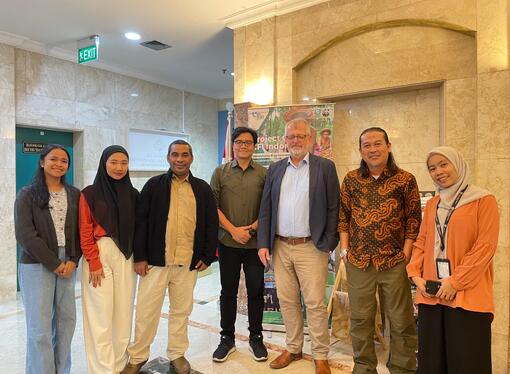
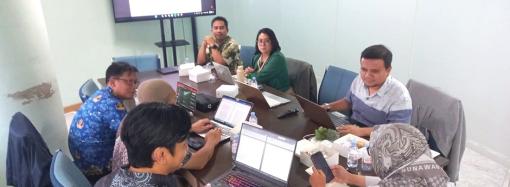
Fishery Extension Workers accompanying and assisting data collection processes during Monitoring and Evaluation (Monev) activities conducted by the Planning Bureau Team of the Ministry of Marine Affairs and Fisheries (MMAF) in Watkidat Village, Southeast Maluku Regency. This activity forms part of the Blue Economy Implementation Study to evaluate the impacts and achievements of the GEF-6 CFI Indonesia Program, particularly its contributions to coastal ecosystem management, economic productivity enhancement, and community welfare.
In Watkidat, 73 percent of fishers and Pokmaswas perceived changes in coral reef conditions, while 78 percent perceived changes in seagrass beds. The 2025 MEHI analysis indicated that Watkidat's water conditions generally range from moderate to good categories, with several areas classified as good to very good. Meanwhile, in Kiltay and Kilwaru, perceived improvements in coral reef conditions reached 55 percent, mangroves 79 percent, and seagrass beds 76 percent.
Sasi practices as local wisdom serve as social capital to reinforce resource utilization regulations. However, the study also noted that patrol frequency and area surveillance still require enhancement through institutional strengthening and participatory monitoring.
Productivity and Economic Added Value Begin to Emerge
Under the Ocean Wealth dimension, enhanced capacities among fishers and business groups open opportunities for productivity improvements and alternative livelihood development. In Menarbu, average capture productivity reaches approximately 300 kilograms per month. However, remote geographical conditions present operational cost challenges, with average expenditures of IDR 3.2 million and net incomes around IDR 4 million per month.
Opportunities for value addition are evident in fishery product processing businesses. In Laha, processing yields an average of 0.43 kilograms of product from every one kilogram of raw material, with an added-value ratio of 27 percent. In Kilwaru, salted fish processing yields an average of 0.42 kilograms of product per kilogram of raw material, with an added value around IDR 60,000 per kilogram and an added-value ratio of 36 percent.
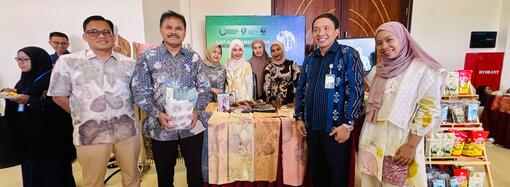
In Menarbu, processing businesses recorded an added-value ratio of 80 percent. An 11-member group develops tuna floss, grouper floss, snapper floss, alongside creative products such as tote bags and eco-print fabrics. In Watkidat, the Solait group developed an eco-print business with production values around IDR 30 million in 2024 and IDR 22 million in 2025. These achievements demonstrate economic opportunities alongside challenges in maintaining production and marketing continuity.
Technical training, group mentoring, product development, and marketing promotion constitute vital components of the interventions. Coastal women also gained broader spaces to engage in productive economic activities, through both fish processing and creative enterprises based on local potential.
Community Welfare: Happiness Index Reaches 74 Percent
Under the Ocean Prosperity dimension, the Coastal Community Happiness Index across the five locations reached 74 percent on a scale of 1–100. This index encompasses life satisfaction, emotional well-being, and life meaning. In Watkidat, the happiness index reached 75 percent, with emotional scoring at 77.65 percent, life satisfaction at 75.20 percent, and life meaning at 74.12 percent.
These results depict relatively positive community evaluations concerning life, social relationships, family, and the environment. Nonetheless, the happiness index serves as a subjective welfare metric and does not automatically indicate the fulfillment of all economic needs. Limited incomes, access to capital, health and education services, technology, and sea-safety measures remain ongoing challenges.
GEF-6 CFI Indonesia Learnings for Sustainable Fishing Village Development
The Project Manager of the GEF-6 CFI Indonesia PMU, Dr. Adipati Rahmat, appreciated MMAF's initiative in conducting program impact monitoring and evaluation studies. According to him, evaluations are critical not only to measure project achievements but also to ensure benefit sustainability after project completion.
“We appreciate the initiative of the Ministry of Marine Affairs and Fisheries (MMAF) in conducting monitoring and impact evaluation studies for GEF-6 CFI Indonesia. This study is highly crucial, not only to measure project achievements, but also to ensure the sustainability of its benefits after project conclusion. These evaluation findings reaffirm that integrating ecosystem conservation, community economic strengthening, and coastal community empowerment constitute vital foundations in realizing a sustainable blue economy,” he stated.
He expressed hope that GEF-6 CFI Indonesia's best practices and learnings can be adopted and integrated into MMAF programs, including the development of the Red and White Fishing Village (KNMP). Local institutional strengthening, community wisdom-based conservation, women's empowerment, and productive business development represent approaches worthy of expansion.
“Ultimately, project success is measured not merely by what is achieved during execution, but by how impacts and learnings continue to live, grow, and deliver benefits long after the project ends,” he added.
In line with this, Rudi Alek Wahyudin emphasized that program sustainability requires ongoing collaboration, particularly in business institutional strengthening, financing access, production facilities, product quality, and market networks.
Through data-driven Monev, MMAF gains learnings to refine policies and programs according to the characteristics of each region. GEF-6 CFI Indonesia's experiences reaffirm that sustainable marine and fisheries development must place communities as primary actors while ensuring marine ecosystems remain healthy and deliver economic benefits for future generations.
0 COMMENTS