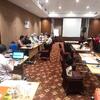


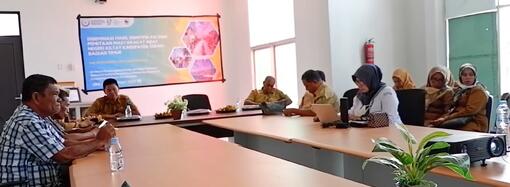
Efforts to strengthen sustainable fisheries management through the ecosystem approach, or Ecosystem Approach to Fisheries Management (EAFM), continue through human resource competency enhancement. A total of 11 officials from the Ministry of Marine Affairs and Fisheries (MMAF) were declared competent after participating in the EAFM Special Job Competency Certification Scheme (SK3) Competency Test held from October 23–25, 2026, in Bogor, West Java.
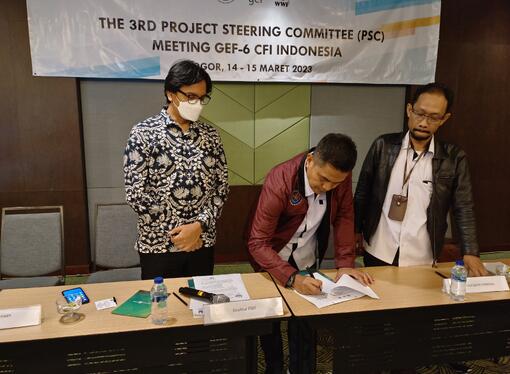
This activity forms part of GEF-6 CFI Indonesia's support through direct grants to the Conservation and Marine Services Professional Certification Body (LSP KJK), as stipulated in the 2026 Annual Workplan and Budget (AWPB) Number 9. This support not only facilitates competency test execution but is also directed at strengthening the capacity and readiness of LSP KJK in organizing EAFM SK3 competency certifications.
.jpeg)
A total of 11 officials from the Ministry of Marine Affairs and Fisheries (MMAF) participated in the Ecosystem Approach to Fisheries Management (EAFM) Special Job Competency Certification Scheme (SK3) Competency Test from October 23–25, 2026, in Bogor, West Java. All participants were declared competent based on the LSP KJK plenary meeting results on October 30, 2026.
Strengthening LSP KJK's institutional capacity is one of GEF-6 CFI Indonesia's strategic achievements. Through this facilitation, it is expected that a certification body capable of supporting the development and recognition of EAFM competencies sustainably will be available. Moving forward, certification services are expected to reach officials from various directorates within the Directorate General of Capture Fisheries as well as other work units across MMAF, alongside professionals and practitioners from various institutions in Indonesia.
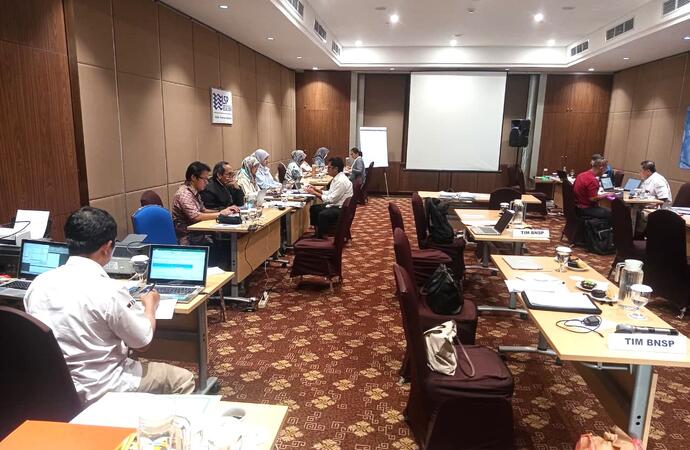
Competency test results were determined through the LSP KJK plenary meeting on October 30, 2026. In this meeting, all 11 participants or candidates were declared competent according to the standards of the certification scheme pursued. Assessment execution involved competency assessors and was witnessed by the National Professional Certification Board (BNSP) Team as part of the certification quality assurance process.
The 11 participants consisted of six women and five men. As many as 10 participants originated from the Directorate of Fish Resource Management, Directorate General of Capture Fisheries, while one other participant came from the Pontianak Marine and Fisheries Management Center, Directorate General of Marine Spatial Planning.
The competency test was conducted across three schemes: EAFM Implementer, attended by two participants; EAFM Evaluator, one participant; and EAFM Planner, eight participants. These three reflect complementary competencies within the ecosystem-based fisheries management cycle, ranging from improvement action execution, evaluation, to management planning formulation.
Under the EAFM Implementer Scheme, participants were tested on their ability to build stakeholder commitment, prepare and socialize fisheries improvement actions, execute activities collaboratively, and monitor implementation. The EAFM Evaluator Scheme focused on evaluation capabilities in fisheries management based on ecosystem approach principles and indicators. Meanwhile, the EAFM Planner Scheme assessed planning formulation capacities accounting for fish resource conditions, ecosystems, social, economic, and institutional aspects.
Prior to assessment, participants received EAFM briefings and refresher materials. Activity sequences also included administrative requirement checks, assessment document completion, and orientations regarding assessment tools. The BNSP Team also witnessed the process through a witnessed assessment mechanism, including spot checks and evaluating certification execution compliance. This process constitutes part of fulfilling requirements for expanding LSP KJK's certification scope according to BNSP guidelines.
The Director of the Conservation and Marine Services LSP, Dr. Ir. M. Fedi A. Sondita, M.Sc., in his activity implementation report conveyed that this competency test is not solely aimed at conferring competency recognition to participants. The activity also forms part of providing competent human resource development tools to support the preservation and sustainable utilization of fish resources.
GEF-6 CFI Indonesia Project Manager Dr. Adipati Rahmat affirmed that the success of this certification test forms part of building a stronger and more sustainable EAFM competency development system in Indonesia.
“For GEF-6 CFI Indonesia, this success is not merely producing competent MMAF officials, particularly EAFM Planners. This achievement also complements CFI's strategic contribution in supporting the establishment of the Indonesian National Work Competency Standards (SKKNI) for Marine EAFM. This means we are not only building competency standards, but also beginning to field human resources possessing formal and measurable competency recognition to apply EAFM in fisheries management,” he stated.
Furthermore, Adipati conveyed that strengthening LSP KJK's capacity through CFI facilitation is expected open broader certification opportunities.
“We hope this initiative becomes the foundation for forming a competent, certified, and nationally recognized community of EAFM experts. Successful EAFM implementation is inadequately sustained by policies and standards alone; it also requires growing numbers of experts capable of translating them into tangible, measurable, and sustainable fisheries management practices,” he added.
Strengthening official and expert competencies is a vital aspect of EAFM implementation. This approach considers not only fish production and resource utilization but also ecosystem health, community socio-economic conditions, and governance and stakeholder engagement. In fisheries management across Fisheries Management Areas of the Republic of Indonesia (WPPNRI), human resource capacities understanding EAFM principles are required so that policies and programs are formulated based on ecosystem conditions and executed in an integrated manner.
Although the LSP KJK plenary meeting has declared all participants competent, certificate issuance still awaits the completion of follow-ups on findings listed in the Non-Conformity Sheet (LKS) submitted by the BNSP Team. LSP KJK must complete these follow-ups before certificate issuance procedures can be resubmitted to BNSP.
For GEF-6 CFI Indonesia, this milestone marks an important step connecting competency standards, certification institutions, and the availability of competent human resources. With reinforced LSP KJK capacity alongside opened certification opportunities for officials, professionals, and crossinstitutional practitioners, EAFM implementation is expected to become increasingly effective and consistent. Ultimately, this strengthening is anticipated to support fish resource sustainability while elevating governance quality and coastal community welfare.
0 COMMENTS