
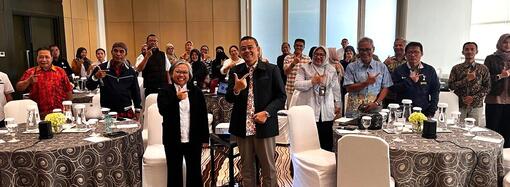

How can fisheries continue to grow without compromising the sustainability of marine resources? This question lies at the heart of the Kick-off Meeting for the Ecological and Socio-economic Impact Assessment of the Modified Bagged Shrimp Bottom Trawl (JHUB) in Indonesian Fisheries Management Area (WPPNRI) 718, organized by Indonesia's Ministry of Marine Affairs and Fisheries (MMAF) in collaboration with Destructive Fishing Watch (DFW) Indonesia, with support from the GEF-6 Coastal Fisheries Initiative (CFI) Indonesia, on 25 June.
Held in Bogor, the meeting brought together representatives from government institutions, research organizations, academia, civil society organizations, the fisheries industry, and development partners. It marked the launch of a comprehensive scientific assessment to examine the ecological and socio-economic impacts of JHUB fishing gear on marine ecosystems and coastal communities, particularly within Indonesian Fisheries Management Area (WPPNRI) 718, which encompasses the Arafura Sea.
The Arafura Sea is one of Indonesia's most productive fishing grounds, particularly for shrimp, a high-value commodity and one of the country's leading seafood exports. While this resource provides significant economic opportunities, it also presents major management challenges. Fisheries is expected to increase production and provide economic benefits to the community while ensuring that marine resources remain productive and sustainable for future generations.
.jpeg)
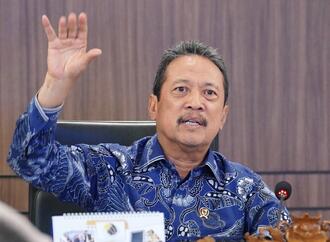
Syahril Abd Raup, Director of Fish Resource Management (PSDI) at MMAF, officially opens the Kick-off Meeting for the Ecological and Socio-economic Impact Assessment of the Modified Bagged Shrimp Bottom Trawl (JHUB) in WPPNRI 718, supported by the GEF-6 Coastal Fisheries Initiative (CFI) Indonesia, Bogor, 25 June 2026.
Syahril Abd Raup, Director of Fish Resource Management (PSDI) at MMAF, emphasized that ensuring the sustainability of fisheries resources remains the overarching objective of Indonesia's fisheries management policies.
"The objective of fisheries resource management is to ensure that fishery resources remain available and sustainable so they can continue to benefit both present and future generations," he said.
He noted that successful fisheries management cannot be measured solely by production volumes or economic returns. Ecological, social, and economic considerations must be addressed in a balanced manner. To achieve this, the Government continues to implement its Quota-Based Fisheries (PIT), which regulates harvest through fishing quotas, numbers of vessels, fishing grounds, and fishing seasons.
Drawing on international experience, he explained that quota-based management is a key instrument for sustaining fisheries resources. However, effective implementation depends on robust scientific data and strong monitoring and enforcement systems.
.jpeg)
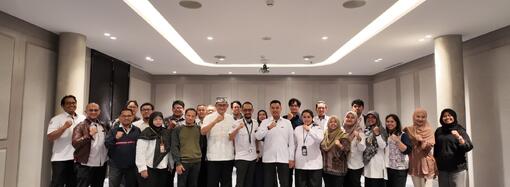
Kick-off Meeting for the Ecological and Socio-economic Impact Assessment of the Modified Bagged Shrimp Bottom Trawl (JHUB) in WPPNRI 718, supported by the GEF-6 Coastal Fisheries Initiative (CFI) Indonesia funding, Bogor, 25 June 2026
The Director also stressed the importance of learning from previous fisheries management experiences, citing the increasing fishing pressure on squid stocks in the Arafura Sea resulting from the growing size of the fishing fleet and the intensity of fishing.
"We do not want high-value resources such as shrimp to experience similar pressures. Their management must therefore be precautionary and science-based," he said.
The assessment is expected to provide scientific evidence addressing key questions surrounding the use of JHUB fishing gear, including its impacts on benthic habitats, bycatch levels, shrimp stock sustainability, and the livelihoods of local fishers and coastal communities.
1.jpeg)
Januar Triadi, a researcher with Destructive Fishing Watch (DFW) Indonesia, presented a proposal for Ecological and Socio-economic Impact Assessment of the Modified Bagged Shrimp Bottom Trawl (JHUB) in WPPNRI 718 at the kick-off meeting held in Bogor on June 25, 2026.
Januar Triadi, a researcher with Destructive Fishing Watch (DFW) Indonesia, explained that the assessment is designed to provide an objective scientific basis for evidence-based policymaking.
"The study is not intended to justify or reject the use of JHUB fishing gear. Rather, it seeks to generate comprehensive scientific evidence on its ecological and socio-economic impacts. We will assess benthic habitats, target and non-target catches, including bycatch, as well as implications for coastal communities and fisheries governance. This will ensure that policy recommendations are data-driven and scientifically accountable," he said.
In addition to ecological aspects, the study will evaluate socio-economic impacts, including the distribution of economic benefits, employment opportunities, and potential marine spatial use conflicts among different resource users.

Adipati Rahmat, Project Manager of the PMU GEF-6 CFI Indonesia, expresses his views and support for the Ecological and Socio-economic Impact Assessment of the Modified Bagged Shrimp Bottom Trawl (JHUB) in WPPNRI 718 during the Kick-off Meeting, Bogor, 25 June 2026.
Adipati Rahmat, Project Manager of the PMU GEF-6 CFI Indonesia, emphasized that policy-making in the fisheries sector must be guided by robust scientific evidence. He noted that Eastern Indonesia, including the Arafura Sea, is globally significant for its rich marine biodiversity and therefore requires particularly careful management.
"Every policy concerning the utilization of marine resources must be based on robust data and credible scientific assessment. Our objective is not only to increase production, but also to safeguard marine resources while improving the well-being of communities that depend on them," he said.
He added that fishing gear management extends beyond fishing technical considerations and encompasses interrelated ecological, economic, social, and governance dimensions. Broad stakeholder participation throughout the assessment process is therefore essential to producing objective and broadly accepted policy recommendations.
Participants also discussed several strategic issues affecting fisheries management in WPPNRI 718, including increasing fishing activity that may lead to overlapping fishing grounds among fleets using different fishing gears.
They highlighted the importance of clearly designated fishing zones, strengthened vessel licensing systems, and enhanced monitoring and surveillance to prevent conflicts at sea while safeguarding fisheries resources.
Participants further emphasized the growing importance of technologies such as the Automatic Identification System (AIS) and other vessel monitoring systems to improve transparency and the effectiveness of fisheries management. This technology support vessel tracking, ensure compliance with fisheries regulations, and generate data required for policy-making.
Through this assessment, MMAF and its partners expect to gain a more comprehensive understanding of the impacts of JHUB fishing gear in the Arafura Sea. Januar Triadi noted that the findings are expected to serve not only as a scientific report but also as a reference for developing adaptive, evidence-based fisheries management policies.
Ultimately, the study is expected to strengthen the implementation of Indonesia's Quota-Based Fisheries, providing a foundation for modern, transparent, and sustainable fisheries management. Such an approach will help ensure that fisheries in the Arafura Sea continue to deliver economic benefits for businesses and coastal communities today while safeguarding marine resources for generations to come.
As global demand for food and economic growth continues to rise, maintaining a balance between resource utilization and marine conservation has become increasingly critical. The assessment of JHUB in WPPNRI 718 represents an important step toward ensuring that Indonesia's fisheries development remains sustainable, inclusive, and firmly grounded in science.
0 COMMENTS