

Global Environment Facility–6 (GEF-6) Coastal Fisheries Initiative (CFI) Indonesia continues to strengthen community-based conservation efforts through two strategic training programmes: Payment for Ecosystem Services (PES) and Sustainable Tourism Management. Both training programmes are being prepared through a Focus Group Discussion (FGD) involving researchers, practitioners, and key stakeholders as part of broader efforts to strengthen community capacity in developing conservation financing mechanisms and economic enterprises based on coastal and marine ecosystems.
The training materials have been developed through an integrated approach to demonstrate that successful conservation depends not only on protecting natural resources but also on providing economic incentives that empower communities to become the primary stewards of coastal ecosystems. Through this approach, conservation is expected to advance hand in hand with improvements in the well-being of coastal communities.
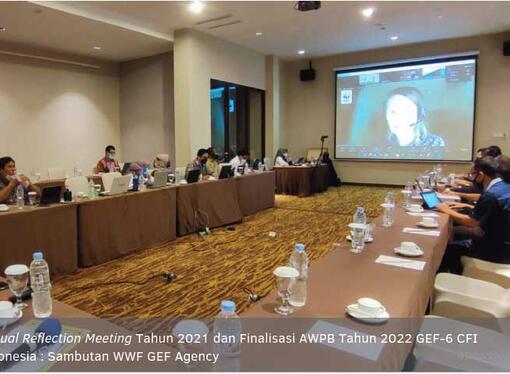
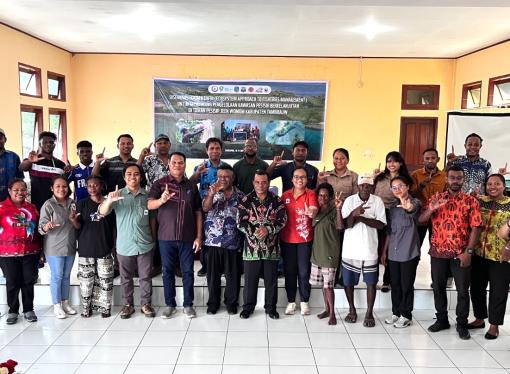
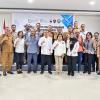
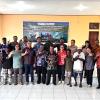
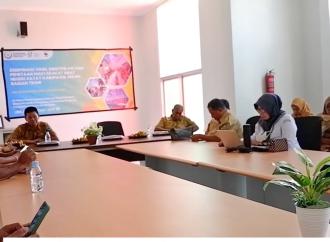
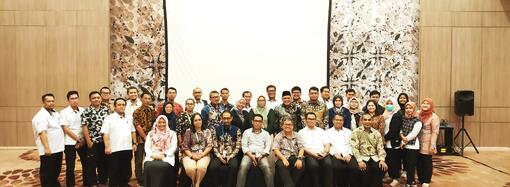
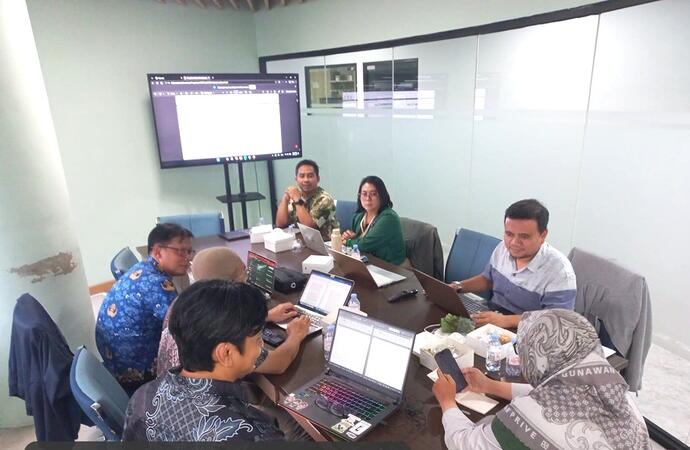
.jpeg) A Focus Group Discussion (FGD) involving BRIN, researchers, practitioners, and other stakeholders to prepare the Payment for Ecosystem Services (PES) Training for Sustainable Coastal Conservation in Southeast Maluku Regency. Facilitated through a GEF-6 Coastal Fisheries Initiative (CFI) Indonesia grant, the activity forms part of efforts to strengthen community capacity to develop conservation financing mechanisms and promote ecosystem-based livelihoods in coastal and marine areas. (17 July)
A Focus Group Discussion (FGD) involving BRIN, researchers, practitioners, and other stakeholders to prepare the Payment for Ecosystem Services (PES) Training for Sustainable Coastal Conservation in Southeast Maluku Regency. Facilitated through a GEF-6 Coastal Fisheries Initiative (CFI) Indonesia grant, the activity forms part of efforts to strengthen community capacity to develop conservation financing mechanisms and promote ecosystem-based livelihoods in coastal and marine areas. (17 July)
During the development of the PES training materials, FGD participants discussed the importance of the economic valuation of ecosystem services as the foundation for establishing conservation incentive mechanisms. Coastal ecosystems, including coral reefs, seagrass meadows, and mangrove forests, provide a wide range of essential ecosystem services, from sustaining fish stocks and protecting shorelines to supporting local livelihoods. However, many of these benefits are not yet reflected in market mechanism. Therefore, the application of economic valuation is essential to support evidence-based policymaking while creating opportunities for sustainable conservation financing.
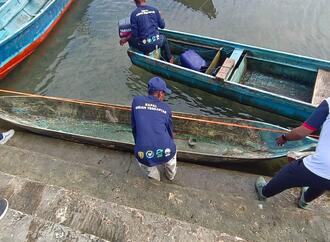
As a case study, the FGD highlighted Ur Island in Southeast Maluku Regency, which offers significant potential for the implementation of a PES scheme. The area supports a diverse range of ecosystem services, including capture fisheries, coral reefs, seagrass meadows, mangrove forests, seaweed aquaculture, and spawning habitats for various fish species. Through the two-day training programme, participants will learn the fundamental concepts of ecosystem services, methods for economic valuation, institutional arrangements, payment mechanisms, and the development of a PES scheme tailored to local conditions and needs.
Meanwhile, the development of the Sustainable Tourism Management Training modules is intended to strengthen the capacity of local communities to develop ecotourism while maintaining the ecological functions of coastal ecosystems. The training materials cover the principles of sustainable tourism, tourism enterprise development, tour package design, basic financial management, and environmentally responsible diving practices.
In addition to strengthening entrepreneurial capacity, the training also promotes an understanding that sustainable tourism is a management system integrating environmental conservation, community well-being, economic sustainability, and good governance. Participants will also be guided to identify tourism potential within seagrass and coral reef ecosystems and to prepare destination development plans that uphold conservation principles.
Husen Rifai, M.Biol.Sc., Researcher at the National Research and Innovation Agency (BRIN), who contributed to the development of the training materials, emphasized that community capacity strengthening should be based on a comprehensive understanding of the relationship between the ecological values and economic values of ecosystems.
"Conservation efforts will be more sustainable when communities recognize that healthy ecosystems provide tangible economic value. Through the PES and Sustainable Tourism training programmes, we aim to strengthen community capacity to manage coastal resources responsibly while creating economic opportunities that safeguard natural ecosystems for future generations," said Husen.
Adipati Rahmat Gumelar, Project Manager of GEF-6 CFI Indonesia, stated that both training programmes form part of the project's strategy to strengthen ecosystem-based fisheries management while enhancing the economic benefits that can be directly enjoyed by local communities.
“GEF-6 CFI Indonesia is not only focused on conservation efforts but also committed to ensuring that communities receive tangible benefits from the ecosystems they help protect. The Payment for Ecosystem Services (PES) scheme and sustainable tourism development are two key instruments for establishing sustainable conservation financing mechanisms while strengthening local economies. We hope these training materials will serve as a practical reference for local governments and communities in developing adaptive, inclusive, and sustainable models for coastal area management,” Adipati said.
0 COMMENTS