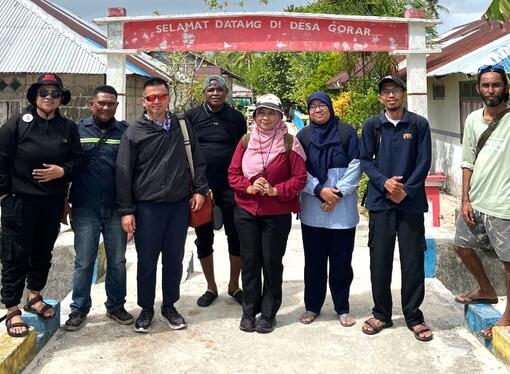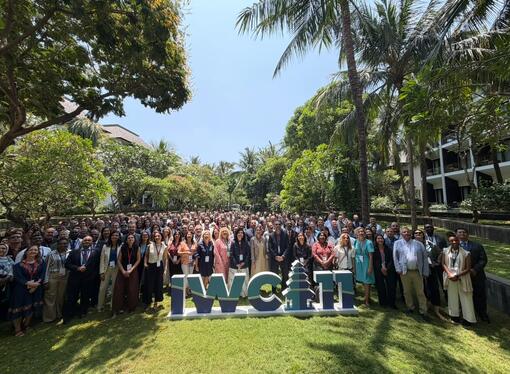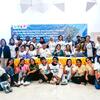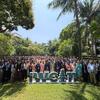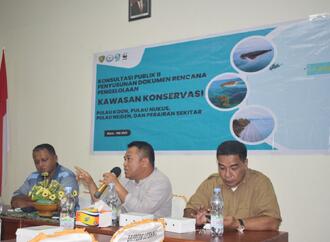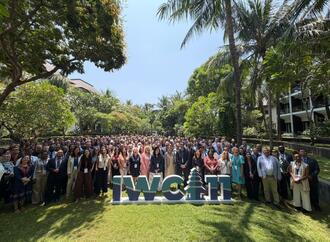
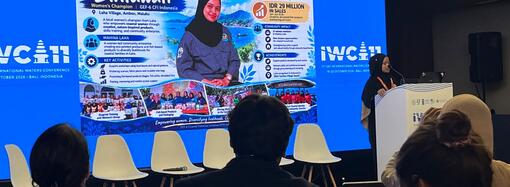
Amidst the gathering of over 400 international delegates at the 11th Global Environment Facility (GEF) Biennial International Waters Conference (IWC11), two Indonesian coastal women brought stories of change growing from the community. Sri Fani Moni and Sintawati, champions mentored by GEF-6 CFI Indonesia, demonstrated that proper mentorship can strengthen individual capacities, mobilize groups, and open opportunities for fishing villages.

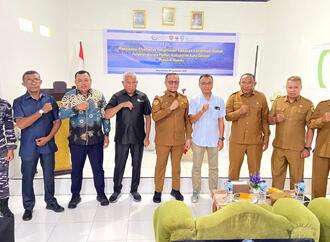
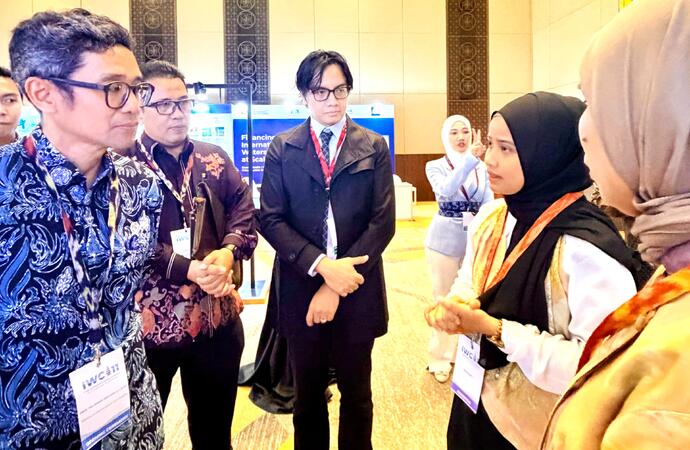
The Deputy Minister for Marine Affairs and Fisheries, Prof. Dr. Irwan Meilano, S.T., M.Sc., accompanied by the Director of the WWF-US GEF Agency, Heike Lingertat, visited the exhibition booth showcasing products from assisted groups and the Knowledge Management of GEF-6 CFI Indonesia during the 11th Global Environment Facility (GEF) Biennial International Waters Conference (IWC11) in Bali, October 19–22, 2026. This visit served as an opportunity to introduce the results of coastal community empowerment, the development of flagship products from assisted groups, and best practices in sustainable fisheries management developed by GEF-6 CFI Indonesia.
Their presence received appreciation from the Deputy Minister for Marine Affairs and Fisheries, Prof. Dr. Irwan Meilano, S.T., M.Sc., who noted that these champions can serve as role models for other communities, especially women and coastal communities facing various limitations.
“I am very pleased to meet the champions today; they can become examples for the community. Amidst limitations, they find new solutions that benefit the community,” he stated during the IWC11 series in Bali, October 19–22, 2026.
He expressed hope that the empowerment model supported through cooperation between the GEF and the Ministry of Marine Affairs and Fisheries (MMAF) can be expanded so that more communities have the opportunity to develop.
“We hope this model is replicated for many housewives and communities, especially in coastal areas, so they can change their destiny and become an important part of Indonesia's progress in the future,” he added.
The Blue Economy and Ecosystem Connectivity
In his opening remarks at IWC11, the Deputy Minister of MMAF also emphasized the importance of viewing rivers, coastal areas, and the sea as a single interconnected ecosystem. According to him, ocean health cannot be separated from the health of rivers and the communities dependent on aquatic resources.
.jpeg)
The Deputy Minister for Marine Affairs and Fisheries, Prof. Dr. Irwan Meilano, S.T., M.Sc., delivered a speech at the opening of IWC11 in Bali, October 19–22, 2026, emphasizing the importance of global collaboration to maintain the sustainability of aquatic ecosystems.
Indonesia, as an island nation with rich marine biodiversity, holds a major responsibility to manage these resources sustainably. Through the Blue Economy policy, marine and fisheries management is directed at strengthening food security and economic development while preserving ecosystems.
In this context, the Deputy Minister of MMAF highlighted the contribution of GEF-6 CFI Indonesia through the Sasi Co-Management approach, which connects local wisdom, sustainable fisheries practices, and community economic opportunities.
This message reinforces the relevance of community empowerment in the global agenda of aquatic resource management. Ecosystem protection is not sufficiently achieved through policies and technical interventions alone, but also requires the involvement of communities as primary actors who safeguard resources while depending their livelihoods upon them.
Proving Change, Not Just Reporting Activities
For the Project Manager of the GEF-6 CFI Indonesia PMU, Dr. Adipati Rahmat, bringing Sri Fani Moni and Sintawati to an international forum was not merely about giving beneficiaries a chance to share stories. More than that, both serve as direct evidence that mentorship since 2022 has produced tangible changes felt by the community.
“The underlying reason we sent our fellow champions is to show evidence. Evidence that this project delivers impact in their respective regions—whether for themselves, their assisted groups, or their fishing villages,” said Adipati.
.jpeg)
The Project Manager of the GEF-6 CFI Indonesia PMU, Dr. Adipati Rahmat, encouraged champions from assisted groups to participate in IWC11 as a platform to share experiences and introduce best practices in coastal community empowerment at the global level. (9/10)
According to him, program success is not adequately conveyed through reports or activity metrics. Change needs to be visible in enhanced community capacities, growing self-confidence, and their ability to develop solutions for their environment and groups.
At IWC11, the two champions had the opportunity to present their experiences before participants from various countries. They also learned to communicate independently in English. This experience demonstrates that empowerment is not only related to technical skills or business development, but also the courage to perform, share knowledge, and build networks.
“For us, they are true champions. They act as project representatives who can demonstrate differentiators through real experiences and change,” said Adipati.
IWC11 Strengthens Collaboration to Safeguard Global Waters
IWC11 carried the theme “Shared Waters, Transformative Solutions: Enabling Systems Change.” This forum brought together governments, international organizations, development agencies, scientists, and community partners to seek joint solutions to the challenges of managing rivers, lakes, coastal areas, and oceans.
Pollution, biodiversity loss, climate change, and increasing pressure on water resources cannot be resolved in isolation. The Source-to-Sea approach is vital because it links land-based management with the health of coastal and marine ecosystems.
The Minister of Environment and Head of the Environmental Control Agency, Moh. Jumhur Hidayat, emphasized that the water crisis requires transformative solutions integrating policy, innovation, sustainable financing, and cross-border governance.
This message aligns with the perspectives of international partners. The Representative of UNDP Indonesia, Sara Ferrer Olivella, emphasized the importance of science, strong institutions, shared priorities, and investment. Meanwhile, the Director of UNESCO's Intergovernmental Oceanographic Commission, Julian Barbière, highlighted the role of science, local knowledge, and innovation in addressing marine challenges.
The CEO and Chairperson of the GEF, Diego Mesa Puyo, also stressed the necessity of cooperation among governments, the private sector, and communities to maintain the connectivity of aquatic ecosystems. Lessons learned from IWC11 are expected to serve as provisions in strengthening collaboration toward the next GEF funding cycle, GEF-9.
Local Wisdom, Economic Opportunities, and Coastal Sustainability
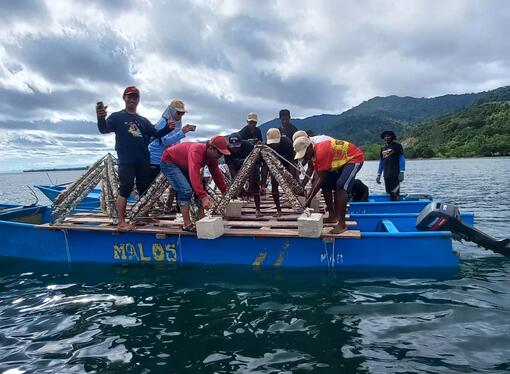
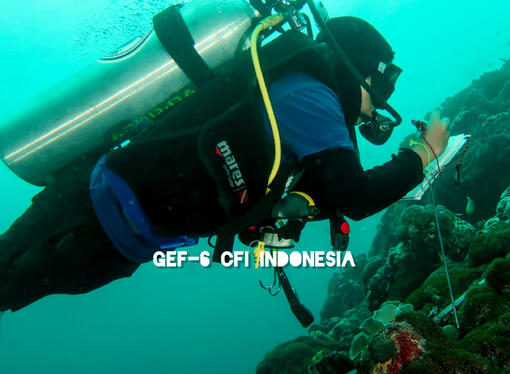
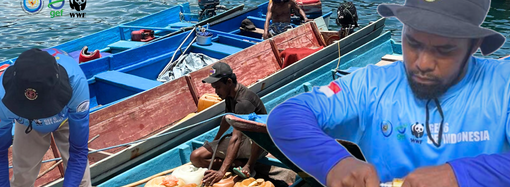
GEF-6 CFI Indonesia implements the Ecosystem Approach to Fisheries Management (EAFM) approach in the Fisheries Management Areas of the Republic of Indonesia (WPPNRI) 715, 717, and 718. This approach links fish stock sustainability with strengthened governance, community capacity, and coastal business development.
One of the practices introduced during the IWC11 series was Sasi Co-Management and the Sasi Label. Both demonstrate how local wisdom can support marine resource management while enhancing the added value of fishery products.
Through the reinforcement of local rules, monitoring, product traceability, and market access development, these practices open opportunities for communities not only to protect resources but also to derive economic benefits from responsible management.
.jpeg)
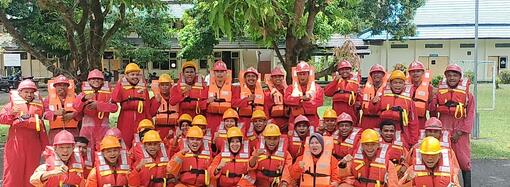
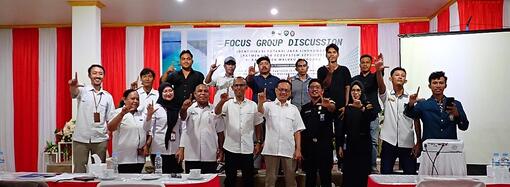
Photo: The Deputy Minister for Marine Affairs and Fisheries, Prof. Dr. Irwan Meilano, S.T., M.Sc., the Expert Staff to the Minister on Ecology and Marine Resources, Hendra Yusran Siry, along with the Director of the WWF-US GEF Agency, Heike Lingertat, posing with champions of assisted groups and the GEF-6 CFI Indonesia PMU Team during the IWC11 activities in Bali.
This approach aligns with the MMAF Deputy Minister's message that aquatic management must integrate ecosystem protection with community welfare. Thus, conservation and economic development do not need to run counter to each other, but can mutually reinforce one another.
Adipati revealed that Indonesia's participation in this conference is also the result of a long process. The idea began when the team attended the International Waters Conference in Uruguay approximately two years prior. From a small team, the collaboration expanded with the support of universities, ministries, local governments, and communities.
“We were only about ten people. However, with the support of partners from universities, ministries, local governments, and especially the community itself, we became a much larger entity,” he stated.
Sustaining Impact After Project Closure
Ahead of the closure of GEF-6 CFI Indonesia on December 31, 2026, the sustainability of outcomes is a critical concern. Mentorship needs to be continued through partnerships, group strengthening, business development, and expanded market access so that the changes built do not cease with the end of the project.
Adipati emphasized that program achievements are the result of collective work by all stakeholders, not solely the implementation team.
“This is not just about securing new activities, but about continuing the dreams we can still build together,” he said.
The MMAF Deputy Minister's appreciation for Sri Fani Moni and Sintawati reinforces the message that coastal communities are not merely program beneficiaries, but primary actors of change.
Through IWC11, GEF-6 CFI Indonesia delivered the lesson that solutions for aquatic sustainability must be built through collaboration, local wisdom, and empowerment yielding tangible evidence. When communities possess the capacity and opportunity to develop, ecosystem conservation efforts can run parallel to welfare improvements.
As emphasized in the opening remarks of IWC11, the future of waters requires joint labor to connect countries, ecosystems, and communities from rivers to oceans. For GEF-6 CFI Indonesia, this principle serves as the foundation to carry forward mentorship outcomes, strengthen partnerships, and expand the benefits of sustainable fisheries management for future generations.
0 COMMENTS